Income tax compliance for Indian businesses comes down to a simple rhythm: keep clean books all year, deduct and deposit tax on time, pay advance tax in instalments, and file your return with figures that match the government's records. This guide walks through that rhythm in plain steps so you know what to do each month and quarter.
Know which income tax obligations apply to you
Not every business has the same duties. Before you build a routine, list what applies to you:
- Return filing: every proprietor, partnership, LLP and company files an income tax return for each financial year.
- Advance tax: payable if your estimated tax for the year, after TDS, is ₹10,000 or more.
- TDS/TCS: applies if you pay amounts such as salary, rent, professional fees or contractor payments above the prescribed limits.
- Tax audit: applies when turnover or profit crosses the limits in the law, unless you are under a presumptive scheme.
The law and its section numbers have been reorganised in recent years, so confirm the current provision and thresholds on the Income Tax Department portal or with your chartered accountant (CA).
Keep your books ready before any deadline
Every filing starts from your books. If ledgers are written up only at year-end, you will rush and make errors. A light monthly routine helps:
- Record every sale, purchase and expense with a voucher or bill.
- Reconcile bank statements to the cash book at least once a month. Our bank reconciliation routine shows how.
- Review receivables and payables, and write off or follow up old balances.
- Review the trial balance for unusual or misposted entries.
For a wider checklist, see bookkeeping checklist for Indian SMEs.
Deduct and deposit TDS on time
If you pay certain amounts to others, you must deduct tax at source at the applicable rate and deposit it with the government. As a general rule, TDS for a month is deposited by the 7th of the next month, and quarterly TDS returns follow for each quarter. Interest and late fees apply when you deduct late, deposit late or file late.
- Check the deductee's PAN before payment.
- Match the rate and section to the nature of the payment.
- Issue TDS certificates within the time allowed.
Our guides on TDS compliance basics and late TDS interest and fees give worked examples. Check the portal for any change in due dates.
Pay advance tax in instalments
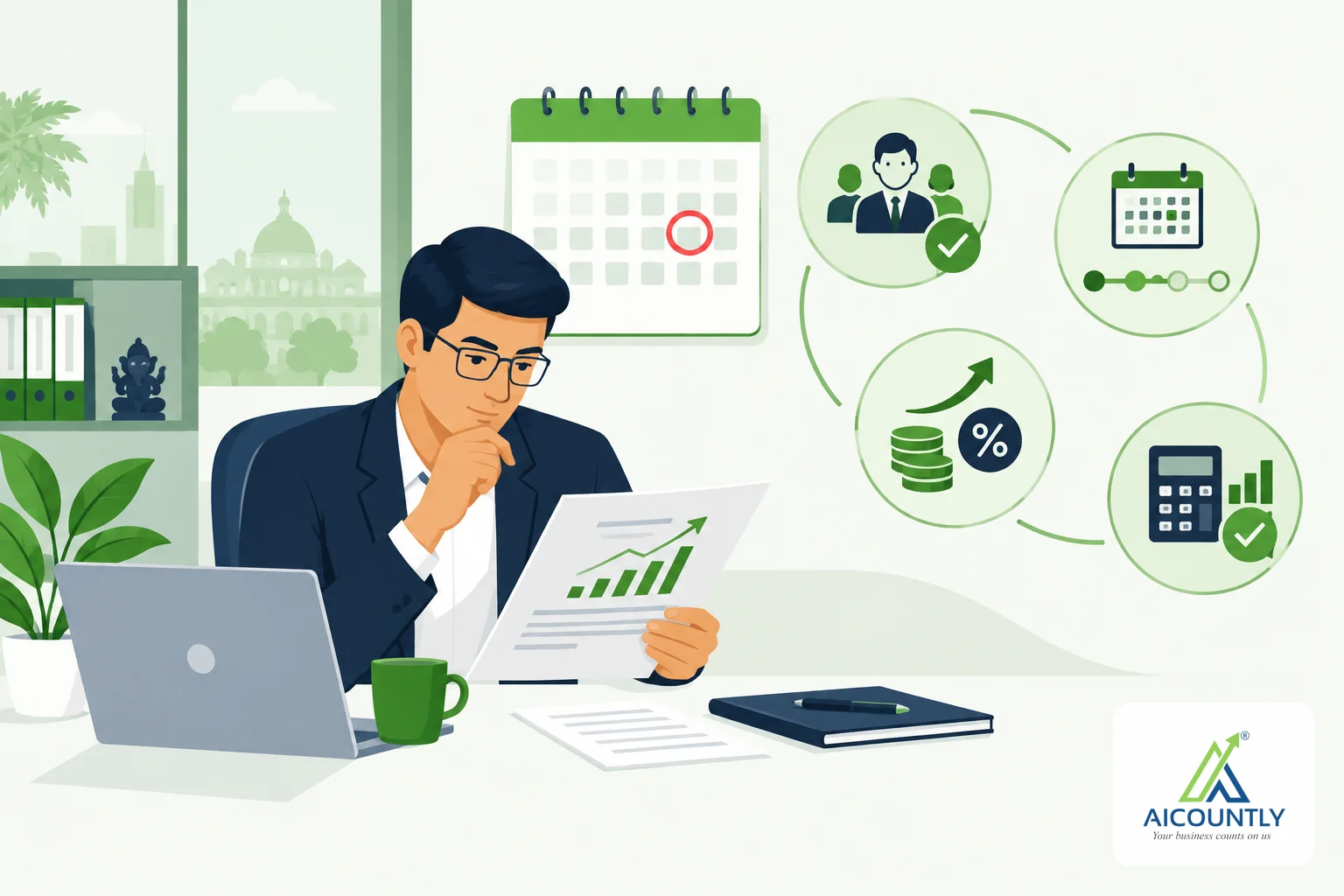
Advance tax means paying your estimated tax during the year rather than in one lump at the end. Businesses generally pay in instalments around 15 June, 15 September, 15 December and 15 March, with a rising share of the total due at each date. Taxpayers under a presumptive scheme usually pay in a single instalment by 15 March.
Estimate your profit every quarter, subtract TDS already credited to you, and pay the balance. Shortfalls and delays attract interest. Read advance tax for FY 2026-27 for the next instalment.
Reconcile your tax credits before filing
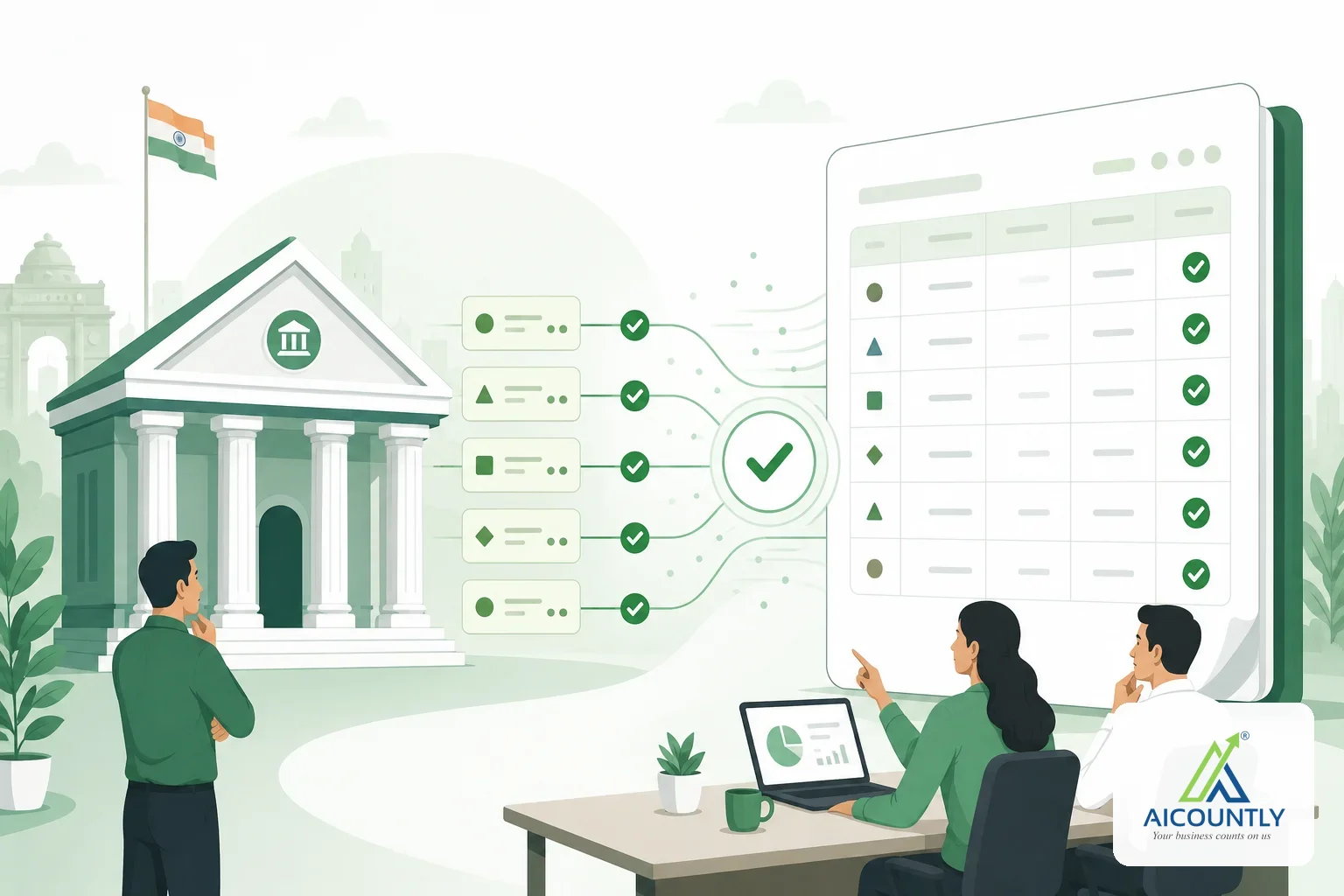
TDS deducted from your receipts is credited to your PAN only if the deductor files correctly. Before you file, compare your books with Form 26AS and the Annual Information Statement (AIS). Differences in income or TDS are the most common reason for notices. Our article on reconciling Form 26AS and AIS explains the steps.
File your return and keep proof
For most non-audit taxpayers the usual due date for the return is 31 July after the financial year ends. For businesses needing a tax audit, the usual date is 31 October. Governments sometimes extend dates, so verify on the portal each year. See the checklist for audit-case returns for the documents to have ready.
- Choose the correct return form for your entity type.
- Check that turnover, expenses and tax paid agree with your books.
- Verify the return (for example with Aadhaar OTP or digital signature) so it is treated as filed.
- Save the acknowledgement and computation with your working papers.
Watch the deductions that need payment discipline
Some expenses are allowed only if you meet a payment condition. Cash payments above the prescribed limit and delayed payments to micro and small enterprises are two examples. Read about cash transaction limits and the MSME payment rule, and review them before year-end.
Key takeaways
- Clean monthly books make every filing easier.
- Deduct and deposit TDS on time, and file the quarterly returns.
- Estimate profit every quarter and pay advance tax by each instalment date.
- Match your books with Form 26AS and AIS before you file.
- Confirm due dates and thresholds on the official portal, and consult a CA for your specific case.
If you want your ledgers and statements in one place, Smart Books includes reports such as Trial Balance, Profit & Loss, Balance Sheet and Bank Reconciliation that help you review your figures before every filing.