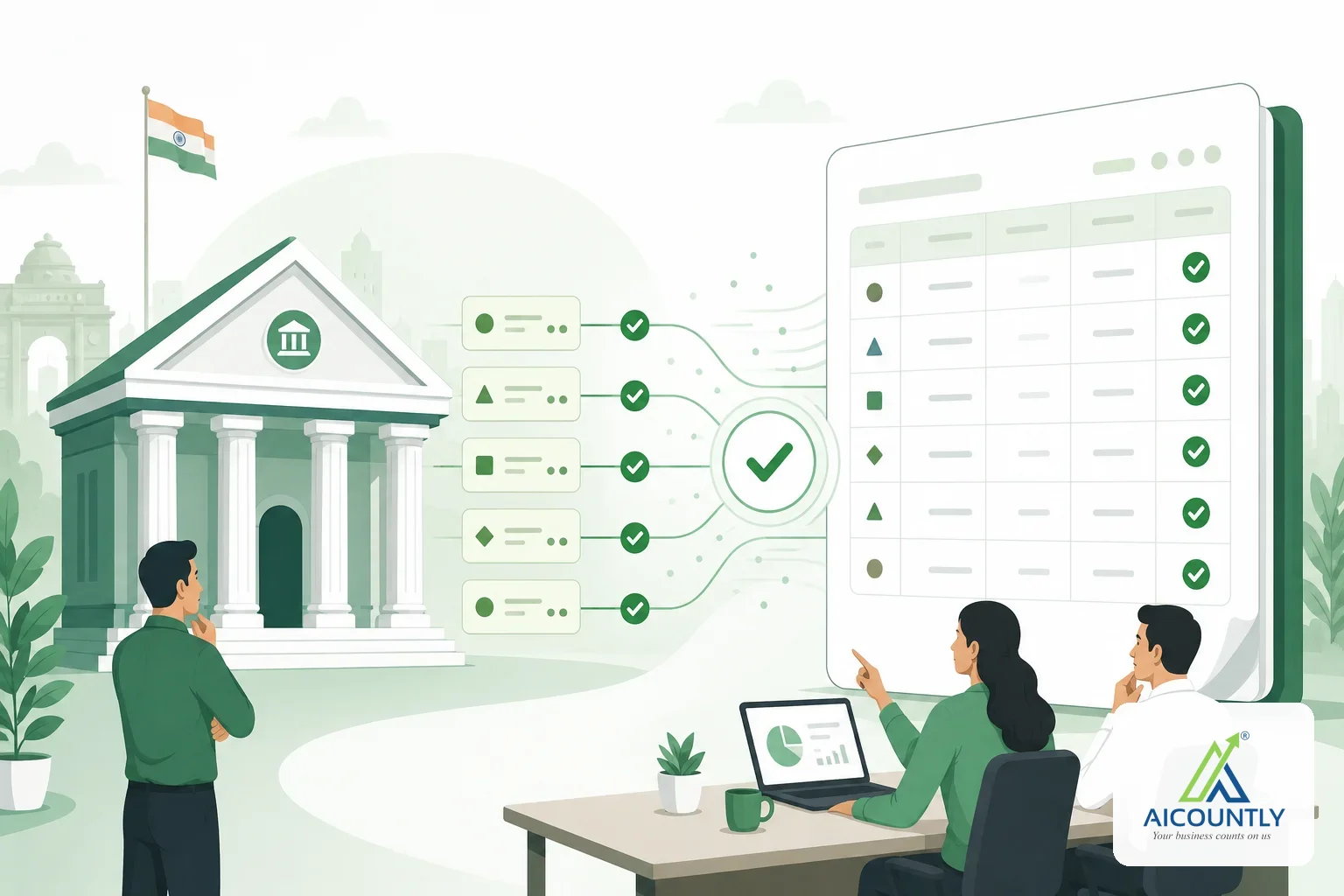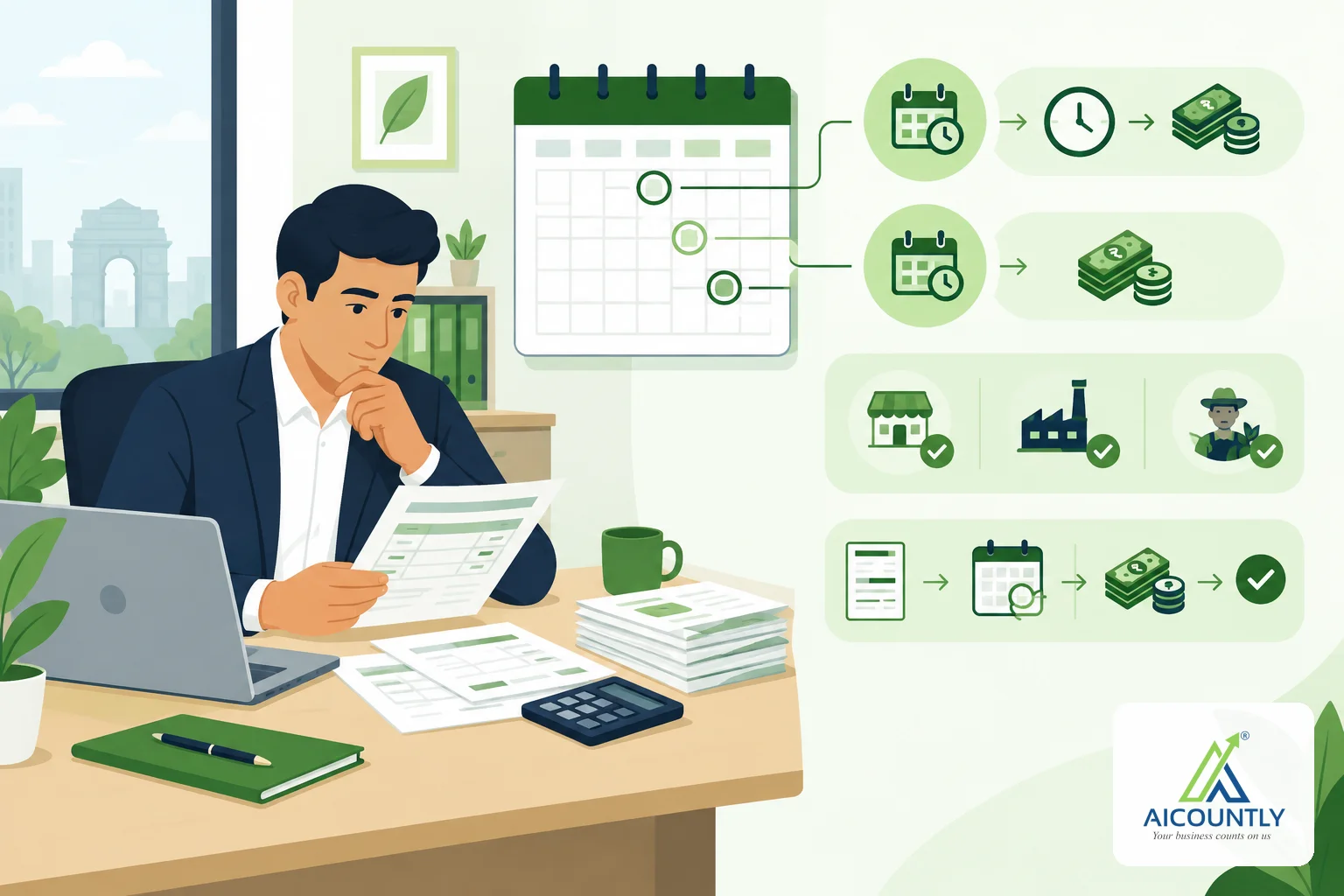
Cash is still common in Indian small businesses, but the Income-tax Act places firm limits on it. Two limits matter most day to day: Section 40A(3), which can disallow a business expense paid in cash above ₹10,000 in a day to one person, and Section 269ST, which restricts receiving ₹2 lakh or more in cash. This guide explains the cash transaction limits in plain words and gives you a simple routine to stay inside them.
Why cash limits matter for your books
The rules exist to push transactions into traceable banking channels. For you, the practical impact is two-fold: a deduction you expected may be disallowed at assessment, or a penalty may be levied on a receipt. Both are avoidable with a little planning and clean records.
Section 40A(3): cash payments above ₹10,000
If you pay a single person more than ₹10,000 in cash in one day for an expense, the amount can be disallowed as a business deduction. The idea is simple: pay by account payee cheque, bank draft, or an electronic mode such as NEFT, RTGS or UPI instead.
- The limit is applied per person, per day, so splitting one bill across the same day does not help.
- Specific cases and exceptions are listed in Rule 6DD, for example certain payments where banking facilities are not available. Do not assume an exception applies without checking it.
- Transporters have a separate, higher limit under Section 40A(3A) and the rules; confirm the current figure before relying on it.
Section 269ST: receiving ₹2 lakh or more in cash
A person cannot receive ₹2 lakh or more in cash in a day from one person, for a single transaction, or for transactions relating to one event or occasion. Breach can attract a penalty equal to the amount received under Section 271DA. Preferred modes are account payee cheque, bank draft, or electronic transfer through a bank account.
Worked examples of cash transaction limits
Example 1 (payments). On 12 November you buy stationery worth ₹7,000 and packing material worth ₹6,000 from the same supplier and pay both in cash. The total paid to one person that day is ₹13,000, which is above ₹10,000, so the expense is exposed to disallowance. Paying one of the bills by UPI or bank transfer would have avoided the issue.
Example 2 (receipts). A customer wants to settle a ₹2,40,000 invoice in cash. Accepting it in full on one day falls within the Section 269ST restriction. Ask for a bank transfer or account payee cheque instead, and record the reference in your books.
What to write in your cash book
A good cash book entry answers five questions: who, how much, when, why and against which document. If a payment above the limit was unavoidable, write down the reason and the exception you relied on, so that you or your CA can explain it later. Do not leave a vague entry such as "misc expense" for large amounts.
When you are unsure, ask before you pay
The limits and exceptions are technical, and the figures have been amended over the years. Before making an unusual cash payment, check the current text of the Act and rules on the Income Tax Department website, or ask your chartered accountant. It is cheaper to ask first than to explain a disallowance later.
Related rules worth knowing
- Section 269SS and 269T: restrictions on taking and repaying loans, deposits and certain advances in cash above ₹20,000.
- Section 43B(h): payments to micro and small enterprises have their own timing rules; see our guide on Section 43B(h) and MSME payments.
A simple monthly routine to stay within cash transaction limits
- Keep a daily cash book. Record every receipt and payment with party name, date and purpose.
- Total by party, by day. Once a week, scan for any party whose cash payments cross ₹10,000 in a day.
- Pay vendors digitally by default. Keep cash for genuine small expenses.
- Reconcile with the bank. Follow the steps in our bank reconciliation routine so cash deposits and withdrawals match your books.
- Collect proof. Keep invoices, vouchers and bank references for audit or assessment.
Cash and your half-year closing
Before you close your books, check cash balances against physical counts and look for large cash entries. Our half-year book closing checklist covers where to look. Cash-heavy entries are exactly the ones an auditor tends to ask about.
Training your team
Most breaches happen at the counter or the petty cash drawer, not in the accounts department. Tell whoever handles purchases and collections about the two limits, share your preferred payment modes with vendors and customers, and ask them to flag any request to pay or accept a large amount in cash. A one-page note on the wall of the accounts desk is often enough.
Common mistakes
- Paying a supplier ₹9,000 twice on the same day and assuming each is a separate payment.
- Recording a large cash sale without the buyer's details.
- Not noting why an exception applied, so it cannot be explained later.
Key takeaways
- Cash payments above ₹10,000 per person per day risk disallowance under Section 40A(3).
- Receiving ₹2 lakh or more in cash in the cases covered by Section 269ST can attract a penalty.
- Default to bank transfers, keep a daily cash book and reconcile monthly.
- Confirm exceptions and current limits with your chartered accountant.
If you are looking for accounting software to keep a clean cash book and reconcile it with your bank, you can explore Smart Books from AICOUNTLY. This article is general guidance, not professional advice; please confirm specifics with a CA.