E-invoicing under GST means that certain businesses must report each B2B invoice to the Invoice Registration Portal (IRP), which returns an Invoice Reference Number (IRN) and a signed QR code. If your turnover has crossed the notified limit, an invoice without an IRN is generally not treated as a valid tax invoice, so this affects both your customers' input tax credit and your own compliance.
Who needs e-invoicing under GST?
E-invoicing applies to registered persons whose aggregate turnover (AATO) in any financial year from 2017-18 onwards exceeded the notified threshold. The current threshold is ₹5 crore, in force since 1 August 2023. Once you cross it, you stay covered for all later years, even if your turnover falls.
E-invoicing is meant for B2B supplies, exports and supplies to SEZs, and certain other documents such as credit and debit notes. Some categories are exempt, for example insurers, banks and NBFCs, goods transport agencies, and SEZ units. Because the exemption list is notification-based, confirm your category on the official portal or with your CA.
Which documents are covered?
- Tax invoices issued to registered businesses (B2B).
- Debit notes and credit notes linked to such invoices.
- Export invoices and invoices for supplies to SEZs.
Invoices to consumers (B2C) are normally not reported to the IRP, though a dynamic QR code requirement may apply to larger businesses. If you are unsure which document to issue in a given case, read our guide on the tax invoice, bill of supply and delivery challan.
How the IRP process works
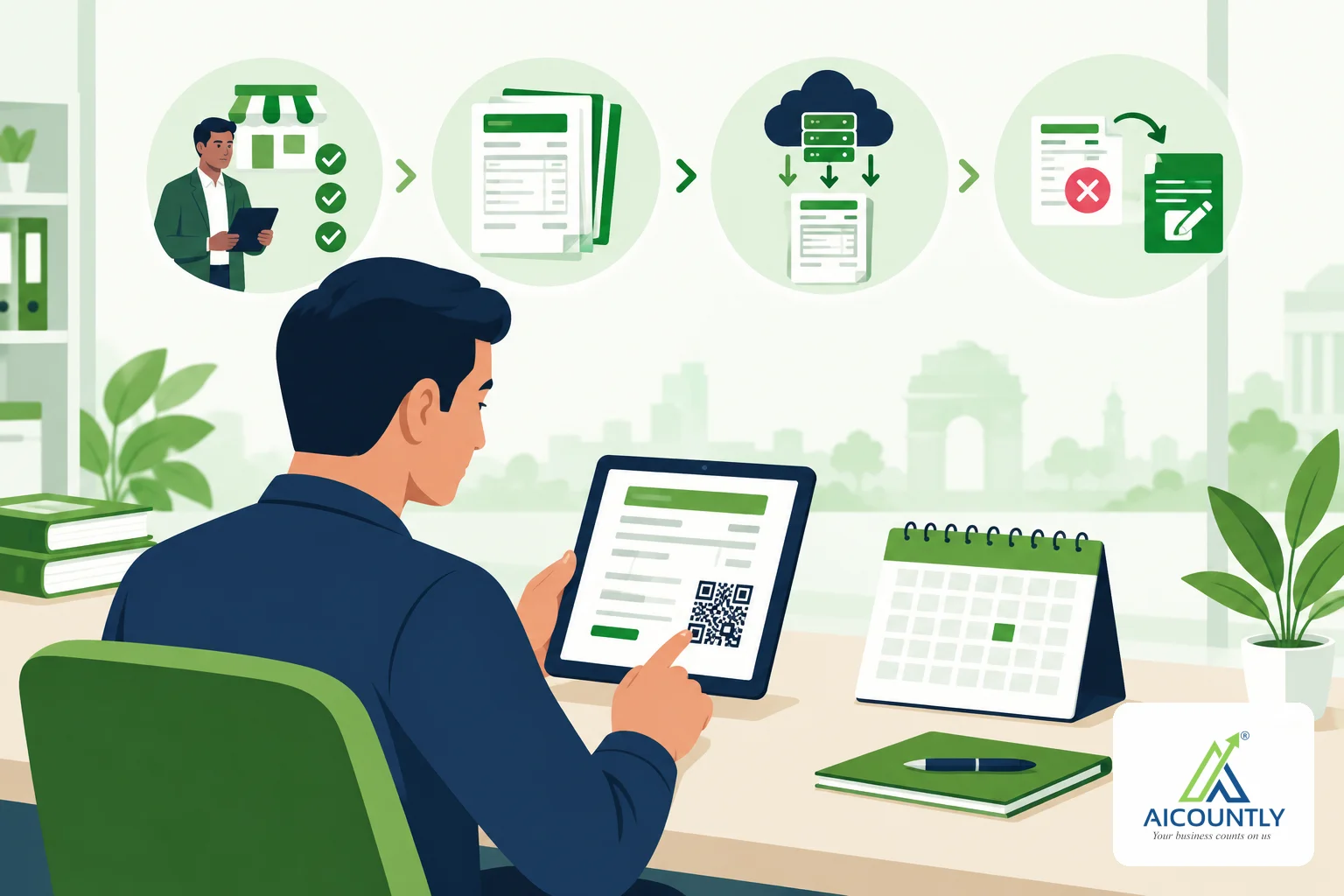
- You create the invoice in your accounting or billing software with all mandatory fields. See the mandatory fields under Rule 46 for a checklist.
- The invoice data is sent to the IRP in the prescribed JSON format.
- The IRP checks the data, generates a unique IRN and attaches a digital signature and QR code.
- The signed details come back to you. You print or share the invoice carrying the IRN and QR code.
- The IRP passes the data on to the GST portal, where it helps populate your GSTR-1 and your buyer's GSTR-2B.
Cancelling or correcting an e-invoice
An IRN can be cancelled on the IRP only within a short window after generation (currently 24 hours), and only if the invoice has not been used in other processes, such as an e-way bill or return filing. After that, you cannot edit the invoice on the IRP. The usual route is to issue a credit note or debit note and report it in the same way. Our article on GST credit notes under Section 34 explains the timing rules.
What happens if you skip the IRN?
If you are covered and issue a B2B invoice without an IRN, the invoice is generally not treated as a valid tax invoice under the e-invoicing rules. In practice, your buyer may face trouble claiming input tax credit on it, and you may face penalty exposure under the GST law. The invoice also will not flow automatically into your buyer's GSTR-2B, which leads to follow-up calls and delayed payments.
For a small business crossing the limit for the first time, the practical steps are simple: confirm your aggregate turnover for each year since 2017-18, register on the e-invoice portal, test with a few invoices, and make sure your invoicing software can send data to the IRP. Plan this a few weeks before the new financial year begins, so you are not changing systems mid-quarter. Keep your team informed as well, because the person raising invoices is usually not the person who files returns.
Common mistakes to avoid
- Issuing invoices to B2B customers before the IRN is generated, then re-issuing them later.
- Wrong or missing buyer GSTIN, HSN code or place of supply, which causes IRP rejections.
- Duplicate invoice numbers within a financial year. The IRP rejects a repeated number for the same supplier.
- Assuming the e-way bill is automatic. Generating an e-way bill is a separate step, though the IRN details can be used to prefill it.
A simple monthly routine
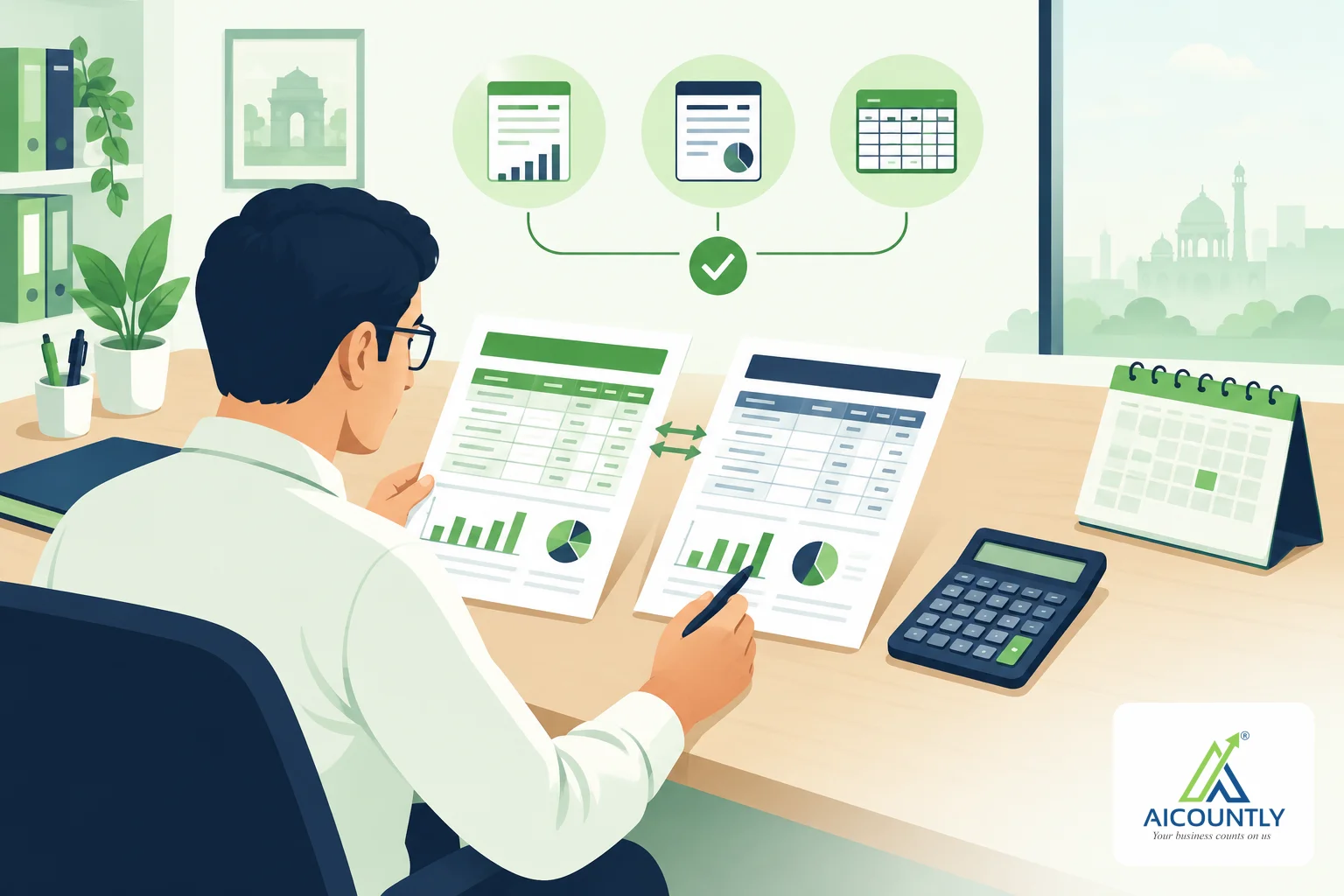
Once a month, before you file, export the list of B2B invoices from your books and match it to the IRNs you have received. Check that every B2B invoice has an IRN, that cancelled invoices were handled within the time limit, and that credit notes are reported. Then follow our GSTR-1 filing checklist so your return agrees with what the IRP has already sent to the portal.
Key takeaways
- E-invoicing is mandatory once your aggregate turnover crosses ₹5 crore in any year from 2017-18.
- B2B invoices, credit and debit notes, exports and SEZ supplies are the main documents covered.
- Cancel within the short portal window or issue a credit note instead.
- Reconcile IRNs against your books every month before filing GSTR-1.
If you are looking for a place to keep your books and bills in order, you can see what Smart Books offers on its product page. Thresholds and exemptions change by notification, so please confirm your position with a chartered accountant.