Bookkeeping and accounting basics for growing businesses come down to one habit: record every rupee that moves, in the right account, soon after it moves. Do that, and your GST returns, TDS payments and year-end accounts stop being a scramble. This guide explains the core ideas in plain words and gives you a routine you can start this week.
Bookkeeping vs accounting: what is the difference?
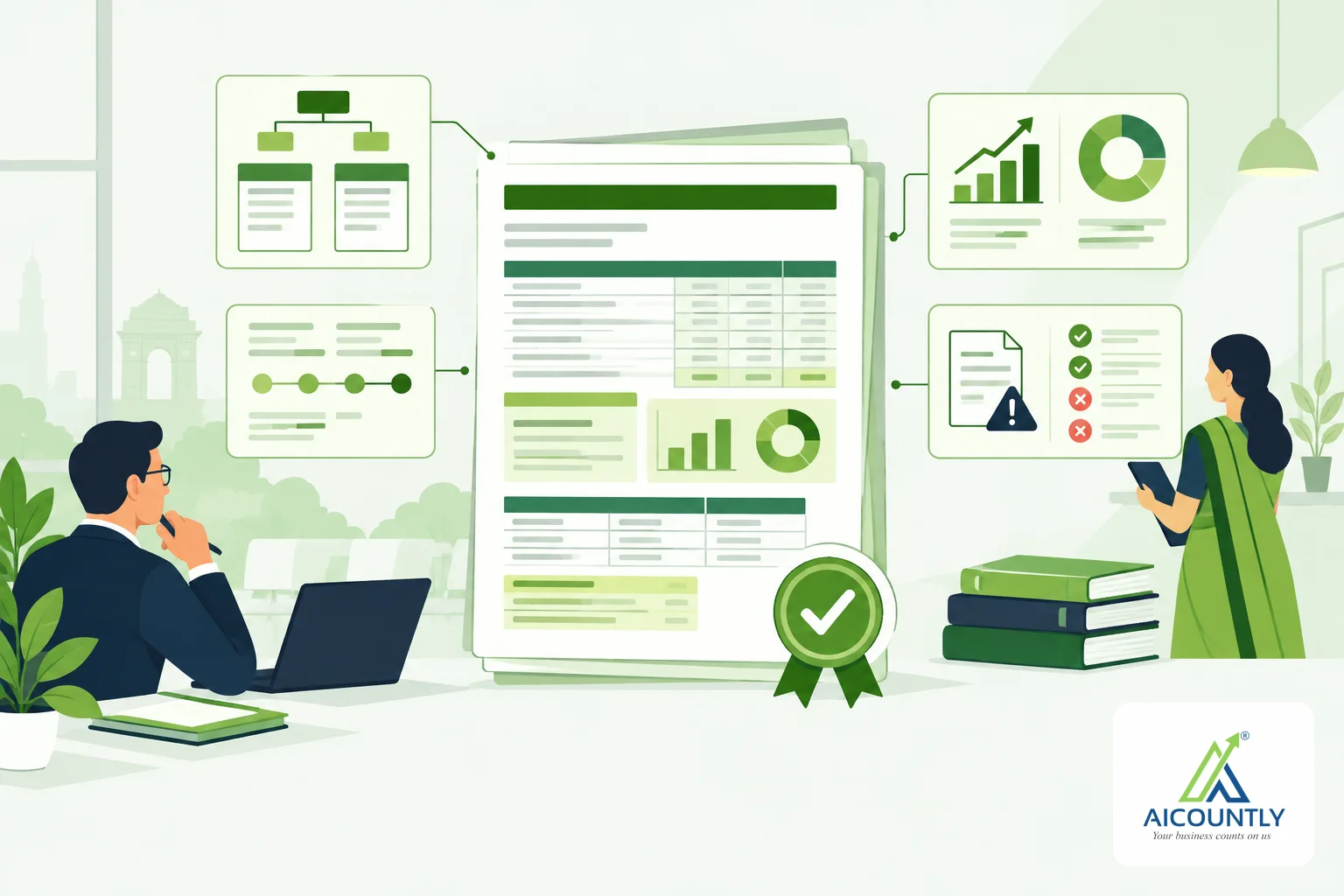
Bookkeeping is the recording work: sales, purchases, receipts, payments and expenses entered as vouchers. Accounting is what you do with those records: summarise them into a trial balance, a profit and loss statement and a balance sheet, and use them to decide things. Good accounting is impossible without clean bookkeeping.
As a business grows, the gap shows. A shop with ten sales a day can survive on a notebook. A business with vendors, staff, GST and bank loans cannot.
The few ideas everything else rests on
- Double entry: every transaction has two sides. Paying rent reduces your bank balance and increases your rent expense. Total debits always equal total credits.
- Ledger: a running record of one account, such as a customer, a vendor, the bank or sales.
- Voucher: the entry for one transaction. The usual types are sales, purchase, receipt, payment, journal and contra (a transfer between your own cash and bank accounts).
- Trial balance: a list of all ledger balances. If debits and credits do not match, an entry is wrong somewhere.
- Accrual: you record income when you earn it and expense when you incur it, not only when cash moves. An unpaid invoice is still a sale, and it is also a receivable.
Set up your books properly once
Most later problems start with a weak setup. Spend an hour on these points:
- Create separate ledgers for each bank account, cash, each customer and each vendor.
- Group expenses sensibly: rent, salaries, freight, professional fees, and so on. Avoid a large "miscellaneous" bucket.
- Keep personal and business money apart. Owner withdrawals go to a capital or drawings account, never to expenses.
- Decide your financial year start (1 April for most Indian businesses) and keep opening balances matched to last year's closing figures.
A simple routine that scales
Daily
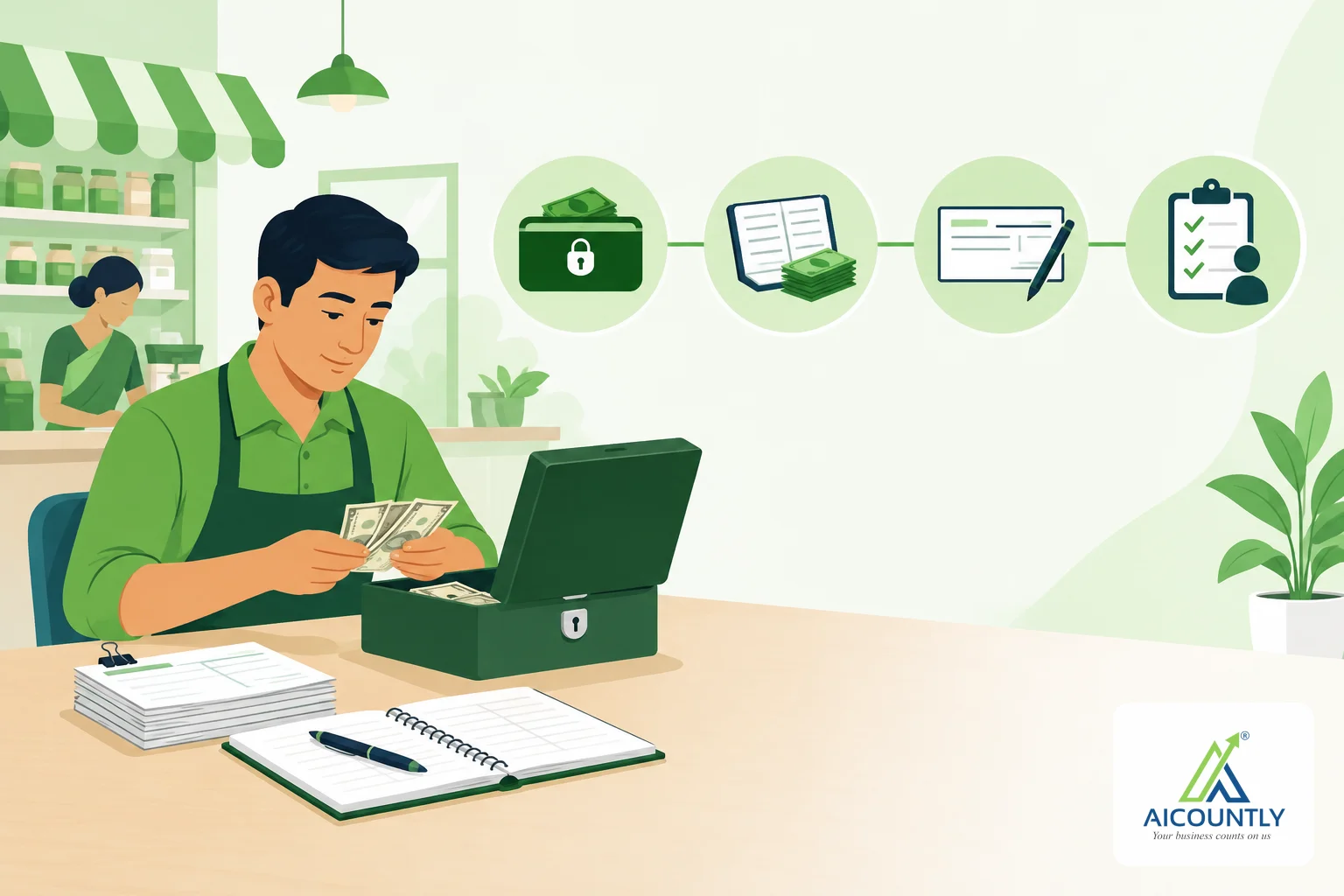
Enter sales invoices, purchase bills, receipts and payments the same day, or at worst weekly. Attach or file the supporting bill. Keep petty cash on an imprest basis; our guide to petty cash management shows how.
Monthly
- Reconcile each bank account with the bank statement. Differences are usually cheques not yet cleared, bank charges or missed entries.
- Review the debtors list and chase overdue invoices using a debtors ageing report.
- Check vendor balances against vendor statements.
- Look at the trial balance, profit and loss and balance sheet for anything odd, such as a negative cash balance.
- Match your books to what you plan to report in GST and TDS returns before filing.
Year-end
Confirm closing stock, accruals for expenses not yet billed, depreciation, and outstanding receivables you may need to write off. Then share clean books with your chartered accountant. Our bookkeeping checklist for Indian SMEs lists daily, monthly and year-end tasks in more detail.
Mistakes growing businesses make
- Mixing cash and accrual: recording sales only when money arrives hides what customers owe you.
- Skipping reconciliation: unreconciled bank accounts are where duplicate or missing entries hide.
- Large cash dealings without records: cash payments can have tax consequences, so read about cash transaction limits and keep proper vouchers.
- Catching up once a year: a year of entries done in one go is slower and less accurate than ten minutes a day.
- No single owner: decide who enters, who checks and who approves, even if the team is two people.
When to move from spreadsheets to accounting software
Spreadsheets work at the start. Consider software when you issue GST invoices regularly, have more than a handful of vendors, need bank reconciliation, or find that reports take hours to prepare. Our checklist for choosing accounting software lists the questions to ask.
Key takeaways
- Bookkeeping records transactions; accounting turns them into reports you can act on.
- Learn double entry, ledgers, vouchers and the trial balance; they cover most of the basics.
- Record daily, reconcile monthly, close properly every year.
- Keep business and personal money separate and keep a document behind every entry.
- Have your books reviewed by a chartered accountant for tax and audit specifics.
If you want this routine in one place, Aicountly's Smart Books offers voucher entry for sales, payment, receipt, contra and journal, bank reconciliation, and reports such as Trial Balance, Profit & Loss, Balance Sheet, Day Book and Account Ledger. This article is general guidance, so confirm specifics with your CA.