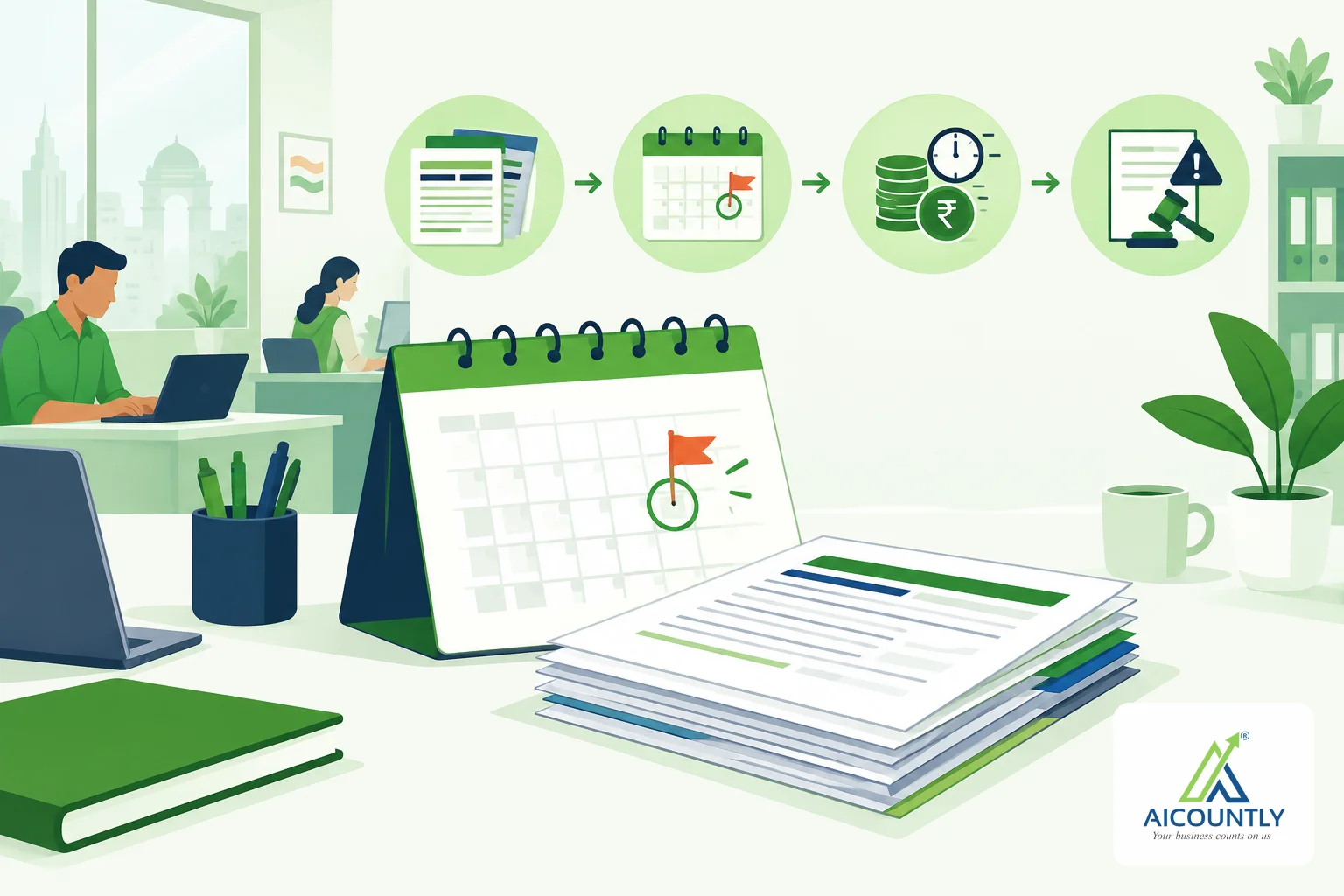
TDS deducted in a month must be deposited with the government by the 7th of the following month, so tax deducted in October 2026 is due by 7 November 2026. Late deduction and late deposit both attract interest, so a fixed routine for the TDS payment due date saves real money.
The monthly TDS payment due date
For most deductors, tax deducted (or collected, for TCS) during a month is due on the 7th of the next month. Two well-known exceptions apply:
- March: tax deducted in March can be deposited up to 30 April.
- Government deductors: offices of the government that pay without a challan (through book entry) follow a different rule. Check the current rules if this is you.
If the 7th is a bank holiday, check the Income Tax Department notifications for the practical deposit date. Extensions are sometimes notified, so confirm on incometax.gov.in before you rely on a date.
Interest on late deduction and late deposit
Interest has two parts under section 201(1A) of the 1961 Act:
- Late deduction: 1% per month (or part of a month) from the date the tax should have been deducted to the date it was actually deducted.
- Late deposit: 1.5% per month (or part of a month) from the date of deduction to the date of deposit.
"Part of a month counts as a full month" is the detail that surprises people. Depositing even one day late costs a full month of interest. A short worked example:
ItemFigure TDS deducted on 20 October 2026Rs 10,000 Deposited on 12 November 2026 (due 7 November)One month or part of a month Interest at 1.5% for 1 monthRs 150The interest must be paid before you file the quarterly return, and it is paid through the challan along with the tax. Interest is not an allowable business expense, and a late return can also attract a separate fee, so deposit on time rather than relying on paying later.
How to pay TDS with challan 281
Challan ITNS 281 is the form used to pay TDS and TCS for companies and non-company deductors. In outline:
- Open the e-Pay Tax service on the Income Tax e-filing portal and log in with your TAN.
- Choose the TDS/TCS challan option (challan 281) and the correct assessment year.
- Select the type of payment (deductible by the deductor, or on regular assessment) and the section or nature of payment code.
- Enter the tax amount and any interest or fee in the right fields, and pay through net banking or another available mode.
- Save the challan receipt. It carries the BSR code, the date of deposit and the challan serial number.
Pay separately for each section code, or make sure the challan clearly covers each section, because the return later links every deduction to the challan that paid it.
Check before you pay
- Is every deduction of the month in your TDS ledger, with the correct section and rate?
- Does each deductee have a valid PAN? Missing or invalid PANs lead to a higher rate.
- Does the total you are about to pay match the TDS payable ledger balance for the month?
- Did you include interest if any deduction or deposit was late?
Keep deposits tied to deductee ledgers
The BSR code, challan date and serial number are exactly what the quarterly return (24Q, 26Q or 27Q) asks for against each deduction. If you record them on the day of payment, return time is much easier, and Form 26AS and AIS later show the same figures to the deductee. Keep the challan receipt with the month's working papers and confirm the deposit appears on the portal.
Key takeaways
- Deposit TDS by the 7th of the following month, except March (30 April) and government deductors.
- Late deduction costs 1% a month and late deposit 1.5% a month, and part of a month counts as a full month.
- Pay through challan ITNS 281 and keep the BSR code, date and serial number.
- Tie each deposit to the deductions it covers before the quarterly return.
If you keep your books in Smart Books, its TDS / TCS area has a challan reconciliation page where you can record the BSR code, challan date, serial number and amount, and allocate unmatched deductions to a challan, so deposits stay tied to deductions. Read more about the Q2 TDS return next.